Search
Flickr Album
Twitter Feed
Tuesday
Aug312010

Student Profile: Eric Linder

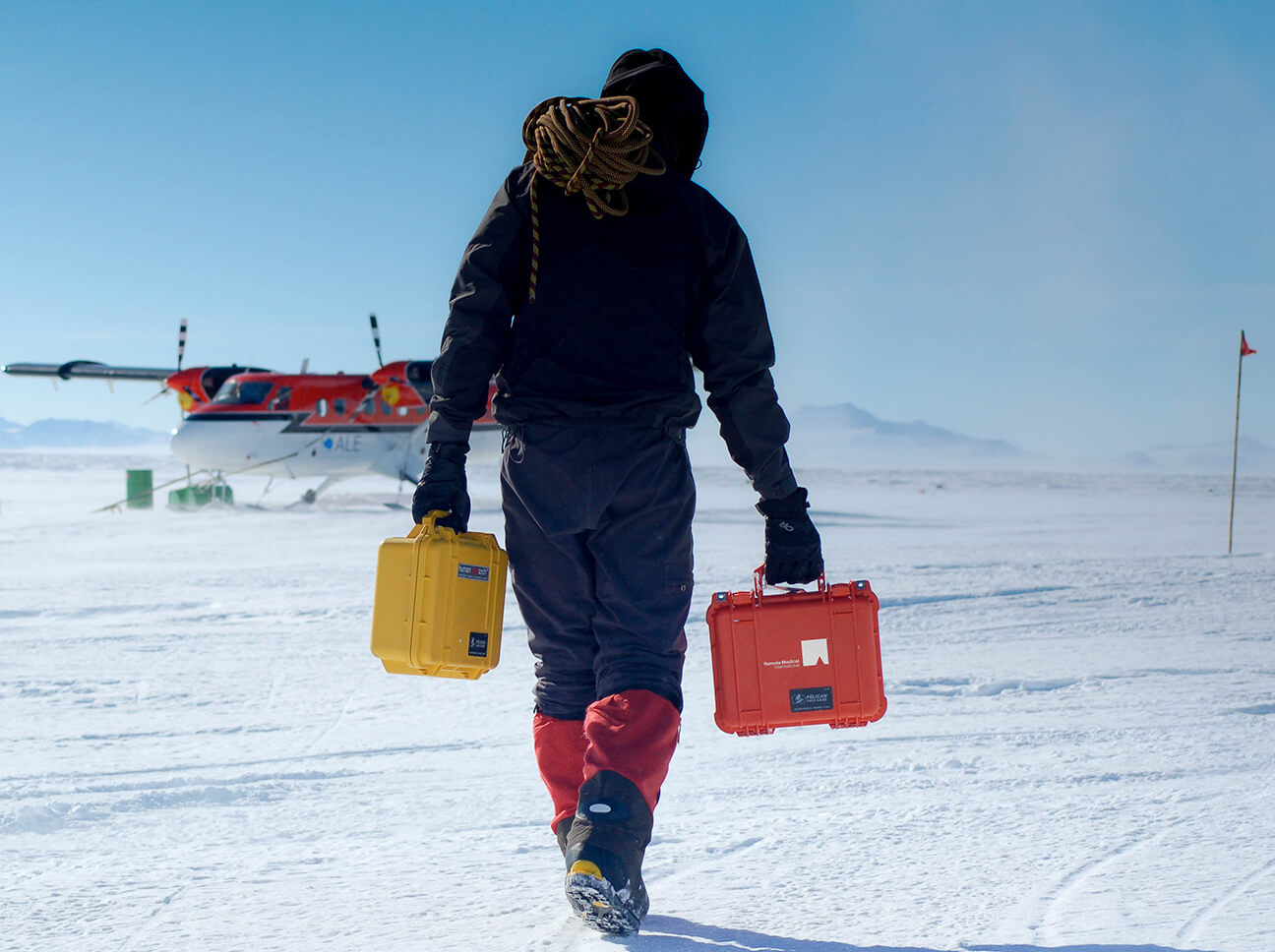
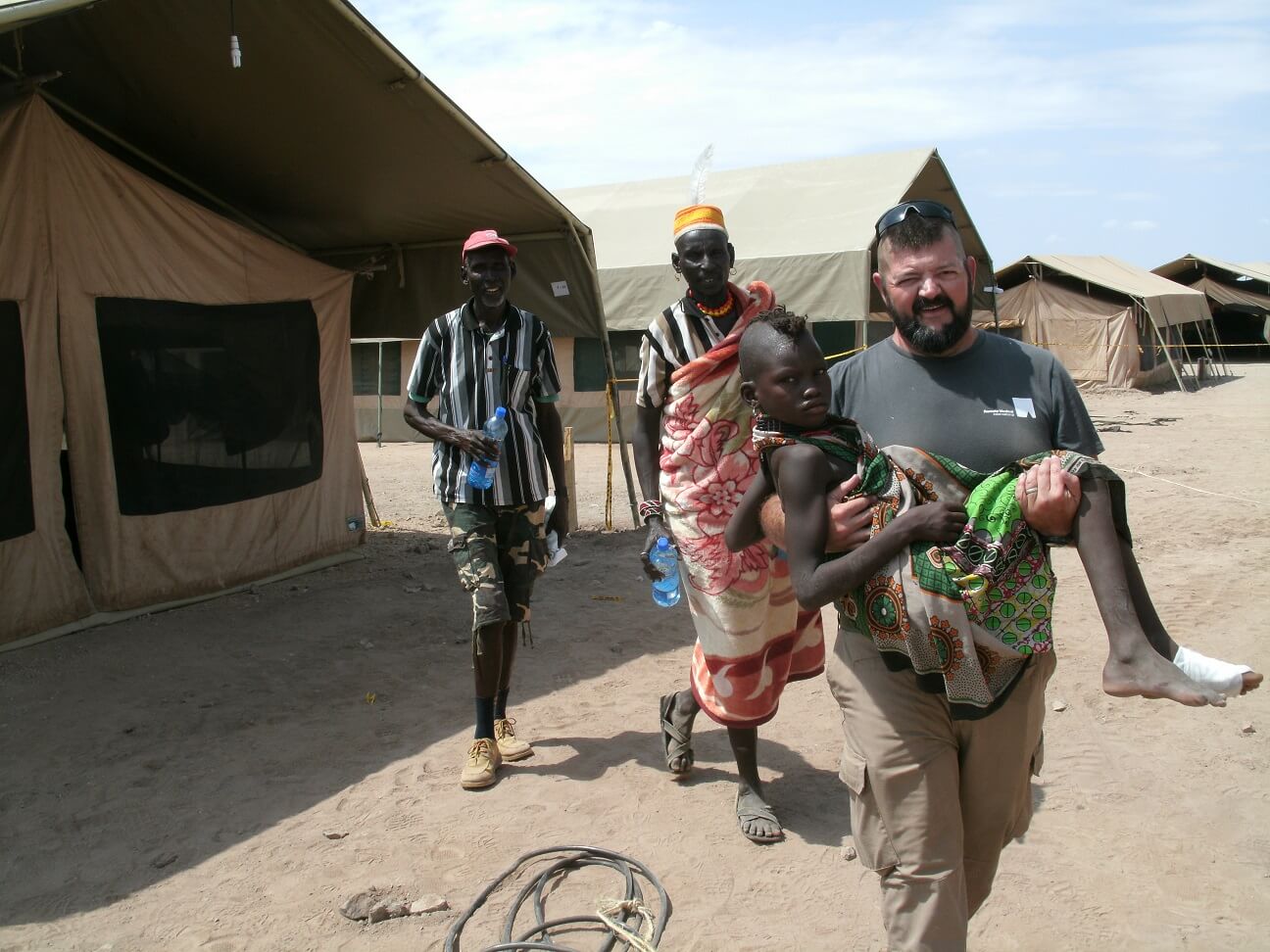
Photo courtesy of Eric LinderWith a background that includes everything from military search and rescue to medical missions abroad, former Remote Medical student Eric Linder knows remote medicine.

“I started out in the military doing search and rescue for pilots downed behind enemy lines.” The military certified Eric as a combat flight paramedic and, after two years of full-time service during the Lebanon War, he is now in his eleventh year as a reservist for the Israeli military.

In 1997, Eric joined the Israeli military as part of a pararescue unit. “It’s a combat search and rescue unit. We did all the austere rescues. Anything from civilians hiking — accidents, extractions — to military rescues. It’s about as remote as you can actually get.”

A few years later Eric returned to the United States but continued working in tactical medicine. Eric now works in the private sector as a safety, security, and medical officer. “In my job I’m teaching wilderness medicine all the time. If there is a trip to India, I research everything about it and then I brief the participants and periodically accompany them .”

Eric's return to the United States also marked his venture into volunteerism. “About two years ago, I went back to Israel and started volunteering for Magen David Adom, the national mobile intensive care service.” Eric now regularly volunteers for weeks at a time and he said his employer was very supportive of the time he devoted to his medical missions. In October he will travel to Uganda as part of a surgical mission. 

Eric expanded his medical knowledge by taking Remote Medical's Remote Medicine for the Advanced Provider course. He followed that with a transition course affiliated from the University of Nebraska & Belize Institute of Tropical Medicine, designed for remote medical practitioners. The course ended in March with a month long residency in Belize. “I spent my first week working with a group called Tejas Missions traveling among jungle villages.” Many of his patients had never seen a doctor before. Eric concluded his final weeks treating patients in the capital's main hospital. Eric is now currently working on his fellowship for the Academy of Wilderness Medicine.

“I chose remote medicine because I like the challenge it offers. It’s about solving problems, like using a tuning fork to diagnose a fracture because you don’t have an x-ray machine.”

Remote Medicine for the Advanced Provider is exactly that. The course helps graduates like Eric make the best choices when the hospital isn’t an option.

Look for more Remote Medical International student profiles on the blog.


Thursday
Aug052010

Instructor Profile: Adam Russell, WEMT

One of the first things Adam Russell tells me when we meet is that he’s fresh off a climb. “I just got back from Mazama where we were climbing Prime Rib, an 11-pitch 5.9 sport climb that is a real jewel of the East side. Since you don't need any trad gear, just a few quick draws, the only thing that would make it more complete is if one were to climb in lederhosen and bring a picnic lunch along to enjoy the cushy ledges and great views of the Methow River along the way.” Already, I’m thinking that Adam is pretty hardcore.

Tired though he might have been, Adam took the time to sit down with me last week and talk about how he became a Wilderness Medicine Instructor at Remote Medical International. While spending time in Ecuador during college, Adam was amazed at the diversity of ecosystems that existed in such a small geographical area. “After that experience, I really wanted to mirror the diversity of the wilderness I had found there somewhere in the U.S.” A native of Austin, Texas, Adam settled on the Pacific Northwest. “It was the only place that had the range I was looking for. From the coast to the rainforest to the glaciers, in Washington, I found it all.”

Adam joined the North Cascades Institute four years ago working with youth groups on educational and canoeing trips. “It was the perfect base camp and I wanted to get into mountaineering and get on and near glaciers.”

Adam quickly found that his lack of medical skills limited his forays into the wilderness. What if something happened out there? That brought him to Remote Medical International's Wilderness First Responder (WFR) course.

After taking his WFR, Adam found that medical education and exploration went hand in hand. “It was a cycle,” he said. The farther out he went, the more training he wanted. That led Adam back to Remote Medical International and the Wilderness EMT (WEMT) course.

It wasn’t long after getting his WEMT that Adam joined the Remote Medical International team as an instructor. When I asked him what his favorite part of teaching was, he answered: “The most remarkable part of teaching classes to the groups of individuals that we teach to, in the way that we teach, is that moment on day 9 of a WFR where you think, if I were to get hurt out there, I sure hope one of these students comes across me.” 

When Adam isn’t teaching or climbing you’re most likely to find him outside. Adam was headed for an urban farm after we spoke. “I am always looking for ways to use resources more efficiently and get more people to connect with the environment and where their food comes from.”

Check out the rest of the Remote Medical International staff on the staff page and keep checking the blog for the next staff profile.

Monday
Jul192010

Wilderness EMT Job Opportunities Open Now!

As a Wilderness Emergency Medical Technician-Basic, jobs focus on remote area medicine are few and far between. Remote Medical International is currently hiring certified WEMTs for projects within the continental United States which provides a unique opportunity to use your unique training and skill-set.

Remote Medical International provides Medical Support Services to clients operating around the world in a variety of industries. You will be working with a crack team of experienced professionals, supported by some of the best physicians in the industry.

That said, the job is hard. You will be responding to both non-emergent and emergent calls in remote areas where external assistance may be an hour or more away. You could be living in a hotel, driving a mobile treatment center on one assignment and providing medical services to a film crew on the next, from a tent high in the mountains. We promise that your medical skills and problem-solving ability will be tested daily; it is precisely this challenge that creates the family-atmosphere here at RMI as well as the pride you will have in your position and abilities.

WEMT positions in the Medical Support Group are very limited, don’t let this opportunity pass you by. If you are a professional, intelligent team-player with a strong work-ethic and a keen interest in constant improvement and learning, this is the job for you.

If you are interested in this position, please submit a two-page letter stating why you are the best candidate for the job by 1800hrs on 20 July, 2010 to employment@remotemedical.com. Positions start immediately.
Monday
Jul192010

Student Profile: Will Adams, WEMT Student

This week the focus is on our students. We're starting off with former Remote Medical student Will Adams. Read his story below.

Remote Medical alumnus Will Adams has always loved the wilderness, but he didn’t always think wilderness medicine was for him. “Before Remote Medical, I owned a bar. But once I volunteered in New Mexico on a mountain rescue team I saw that all the EMTs and paramedics got to do all the cool stuff.” His friends noticed that Will was pretty into the work and recommended be become an EMT.

Will spent a lot of time outdoors as a kid and thought that working with a wilderness education company would be a great way to blend his love of mountaineering with his interest in wilderness medicine. All the jobs he found required a minimum certification of Wilderness First Responder. When he found Remote Medical, he read about the Wilderness EMT course, determined it was what he was looking for, and signed up.

Will returned to New Mexico after completing his Remote Medical course,. He volunteered with a county fire department to get ambulance time. He discovered that he really enjoyed the work and the remote location really challenged him to use all of his Remote Medical training.

“The hospital is about a forty-five minute drive. We would have to fly some of our patients out. In the spring there were often really high winds and that wasn’t possible. We would have to transport for a really long time, so I got to see a lot of continuing-care.”

After working in New Mexico, Will decided that the emergency medical field was where he really wanted to work. He wanted to become a paramedic, but, according to Will, “In New Mexico, the EMS academy is really the only one in the state. The wait list was pretty long.” Did that stop him? Of course not. He moved to California.

Will found a job as an EMT in Oakland and is attending paramedic school. “I just finished the didactic portion and I’m going to finish up back in Washington State.”

His journey from bar owner to paramedic is almost complete and it started at Remote Medical International.

If you have a student whose story you feel should be highlighted on the blog, e-mail ecoltrera@remotemedical.com.


Monday
Jul122010

Staff Profile: Sandy Fraser, Remote Area Paramedic & Instructor

This is the second installment in our series of staff profiles. This week, meet Sandy Fraser. He is a remote-site medic and instructor for Remote Medical.


He’s worked as everything from sailboat racing crew member to nightclub bouncer, but, in any case, Remote Medical instructor and remote-site medic Sandy Fraser does not mess around. Sandy is currently the remote-site paramedic and primary medical provider on a seismic research vessel in the Arctic Circle.

“As a remote medic, you really are the eyes, ears, and hands of the physicians,” he said. Remote-site medic work comes with a whole host of challenges, and right now, for Sandy, they range from the common cold to severe hypothermia to worse. “You don’t have the option of just sending a patient to the hospital. You have to think about how far from port you are, how long it might take to turn the boat around.” Lucky for the crew, Sandy is no stranger to difficult situations.

Sandy did not start in the remote medical field. “I joined the Navy because I wanted to fly helicopters,” Sandy told me. It was during flight school down in Pensacola, Florida that the Navy discovered he could swim. He swam well enough that the Navy moved him out of flight school and gave him a job as a Combat Search and Rescue Swimmer. “Those guys in the movie ‘Top Gun’ that jump out of helicopters to save Maverick? That was pretty much my job,” joked Sandy. After his first tour with the Navy, Sandy worked as a Rope Rescue instructor in Virginia for a rescue squad before again changing careers.

Despite spending time aboard a sailboat in the Caribbean, the soldier in Sandy brought him back to the front lines. In the mid 1990’s Sandy worked in Bosnia as a protection specialist for a team of doctors. “I taught military-style first-aid to anyone that was interested.” No small feat, given that Sandy had to use whatever local materials he could find in a country decimated by civil war.

Sandy also worked in Iraq several times, once for the Navy and later as a soldier for hire. After suffering an injury the last time, Sandy promised his wife to find safer work. “When Remote Medical was looking for instructors a short time later, I jumped at the chance and have never looked back.”

When he isn’t teaching or working as a remote-site paramedic, Sandy is home on his farm. He enjoys shooting, hiking, boating, diving, and caving.

Check out Sandy and the rest of the Remote Medical staff on our staff page. Also, be sure to check out the new pictures on our facebook page, courtesy of Sandy!.

Friday
Jun112010

Staff Profile: Tyler Nielsen

This is the first in a series of profiles designed to highlight the staff here at Remote Medical International. This week, we're starting off with the man in charge of Field Operations in our Training Group.

“

Tyler Nielsen has been a Remote Medical instructor for the last four years. Before beginning a career in wilderness medicine and education, Tyler worked as a commercial fisherman. He has also been in the fire service since 2000, and currently serves as a paramedic in Whatcom County.

Not long after getting his paramedic certification in 2006, Tyler joined Remote Medical at the behest of his friend Christine Avakian to teach the Wilderness EMT course. After teaching a few courses, Tyler deployed to Greenland as a remote area paramedic for Remote Medical. Operating at 11,000 feet, Tyler treated patients experiencing everything from high altitude cerebral edema (HACE) and high altitude pulmonary edema (HAPE), to salivary gland infections and a kitchen knife injury.

Working in Greenland in such a remote setting helped him develop a more primary care aspect of treating patients, says Tyler. He enjoyed the more hands on and in depth approach to emergency medicine that the remote location afforded him. His experience in the field is one of the things that Tyler believes helps him teach.

According to Tyler, what "makes our courses unique is that our instructors all come from very diverse backgrounds. When it comes to practicing remote medicine, we have instructors that work on ships as the sole medical providers, others that come from a guiding background, others that are straight out of the military, and some that have run medical clinics at 11,000 feet in the middle of Greenland. It is our instructors' passion for medicine and this diversity that helps us reach all our students and help prepare them for the vastly different medical emergencies they are sure to encounter."

It isn’t just the instructors that separate Remote Medical from other training and education providers and Tyler is one to give credit where it is due. “Remote Medical’s diversity of student backgrounds also serves to make our courses stronger.” Although he enjoys Remote Medical’s other courses, Remote Medicine for the Advanced Provider “is where I get to teach and learn at the same time. It’s more about starting a conversation.”

When not working for Remote Medical or in the fire service, Tyler is most often found outdoors. Although he enjoys traditional bow-hunting and fly fishing, in the winter Tyler can be found skiing, thinking about skiing, and working at Mt. Baker’s ski patrol clinic.

Check out Tyler and the rest of the Remote Medical crew on our staff page.

Wednesday
May262010

Wilderness EMT Facility... An Important Consideration

While the course location and facility are definitely not the only factors to consider when choosing a Wilderness EMT course provider, it certainly is still important. Remember that you will be staying on site for nearly a month during an intense learning experience. We believe that the facilities we use provide the ideal setting for this learning, while also providing a very comfortable living environment and a multitude of recreational opportunities when you need to escape the stress of the course. Below is some detailed information on the main facility we use to teach our Wilderness EMT classes. We encourage you to read through this and ask any questions.

Tierra Learning Center

Situated on 320 acres in Sunitsch Canyon, 5 miles outside of Leavenworth, Washington, the Tierra Learning Center provides an optimal site for our Wilderness EMT courses. The canyon has a diverse pine and fir ecosystem with an extensive trail network, offering endless possibilities for simulated wilderness medicine scenarios and recreation alike.

Canyon Lodge - This main lodge is the central building where most course activities are based from. On three floors, the Canyon Lodge houses the main classroom, 2 lab classrooms with simulator manikins, the main kitchen, dining area, student lounge area, and library. The large deck provides an easily accessible outdoor classroom when the weather is nice, as well as an additional place for studying and socializing.

Forest Suites (student lodging) - Each student will share a 2-room suite with one other student consisting of a bedroom, living room (with queen-size pullout bed), full bathroom, kitchenette, gas stove, and storage space. Four suites are housed in each building, and there are five total buildings at Tierra. Nestled in between these suites, there is also a hot tub for student and instructor use. While it's definitely not a luxury hotel, the accommodations are clean, comfortable, spacious, and private... a great alternative to bunks or dorm style lodging.

Meals - Meals are prepared daily in the commercial kitchen by our chefs beginning the day the course starts through the last day, including weekends. Meals are typically served buffet style with meat and vegetarian options. Coffee and snacks are also available daily.

Communications - Wireless internet access is available in the Canyon Lodge. Cell phone coverage is limited at Tierra Learning Center, however, phones are available in the Canyon Lodge for outgoing calls, and each suite has a phone that can receive incoming calls. With a short drive to Leavenworth, cell phone coverage is widely available, as is wireless internet at many coffee shops.

Other Amenities - In addition to the above, Tierra Learning Center also houses an outdoor amphitheater where we will occassionally hold class during good weather, a yurt set up for yoga, traditional horseshoe pits, a basketball court, a tennis court, and a volleyball court.

Travel - Inherent in offering a true wilderness medicine experience is the reality that the course location will be some distance away from a major metropolitan area (and airport). While this is true for Tierra Learning Center, the location is easily accessible year-round. Tierra is less than a 3-hour drive from Seattle. Additionally, for those students flying in, very reasonable fares are available to Seattle, and Remote Medical arranges a shuttle service from the airport to the course location on the day before each course starts (as well as a return trip at the end). We will also coordinate an online chat group so that students may communicate with each other prior to the course and arrange carpools if desired.

Leavenworth, WA - With 300+ days of sunshine a year, Leavenworth is a great place to visit, and an even better place to spend a month! Less than a 10-minute drive from Tierra Learning Center, the town offers plenty of shopping, restaurants, coffee shops, bars, festivals, and much more. For the outdoor person, it gets even better, regardless of what season it is. Leavenworth is a world-class destination for climbing, mountain biking, skiing, hiking, kayaking & rafting, and just about anything else you can do outdoors. Remember to bring your gear with you! For more information, check out: www.leavenworth.org

Monday
Mar012010

Tactical Medicine Training for Police Officers featured on Washinton's Most Wanted

Even Police officers need remote medical training and Remote Medical International is there to provide it. Washington state law enforcement officers receive training from Remote Medical about six times a year.

This February 18th, tactical medicine was the focus of an episode of Washington's Most Wanted. Our own Matthew Griffin explained that Remote Medical provides officers with training based on the principles "of'Tactical Combat Casualty Care' or "Teachable C'. They focus on areas that are extremity, hemorrhaging, area management, and chest injuries."

To read the story, check out Washington's Most Wanted

Saturday
Jan162010

Update on Haiti Relief Operation

Over the past week, every operational group here has been mobilizing to support relief efforts in Haiti.  We have received many phone calls and resume submissions and appreciate the willingness of our students and clients to deploy there.

If you are interested in assisting/employment opportunities, we deploy our own staff first to these areas and accept additional emergency hires based on remote area medical/rescue experience and training. If you are a medical provider, we are currently accepting resumes for Paramedics with aero-medical experience, helicopter rescue and/or SOF 18D qualification, Mid-Level Primary Care Providers and Emergency Physicians.

Please send requests and resumes to employment@remotemedical.com.

We do no accept donations for the relief effort except for employee and medical provider time in certain cases. If you are considering making a donation to support efforts in Haiti, please consider Partners in Health.Our thoughts lie with the people of Haiti and we vow to work as hard as we can to support rescue and recovery efforts there.


Tuesday
Jan122010

RMI Instructor Melissa Arnot's Medical Experience an Asset on Kilimanjaro Expedition

For more information on this expedition, visit the First Ascent Blog or the Summit on the Summit Website.